
Increased vibration of the pump directly indicates the development of defects, untimely detection of which is one of the main reasons for the emergency exit of the pump failure. Vibration monitoring of pumps allows you to avoid emergency situations in a timely manner indicating the need for measures to eliminate defects.
Vibration of the pumps can be caused by a number of reasons:
- by the misalignment of the actuator and the pump;
- imbalance of the impeller;
- improper fit of the impeller on the shaft;
- because of incorrect connection of the pipeline;
- the influence of couplings;
- the violation of the geometry of the bearing elements;
- defects in the bearing supports;
- cavitation of the pumped medium;
- by loose parts;
- thermal expansion of the pump elements;
- damage to the foundations and supports;
- insufficient or the quality of lubrication, etc.
Vibration monitoring of pumps is carried out in the control points in accordance with the requirements of GOST ISO 10816-1-97 – on the bearing cap in a transverse, vertical, and axial directions.

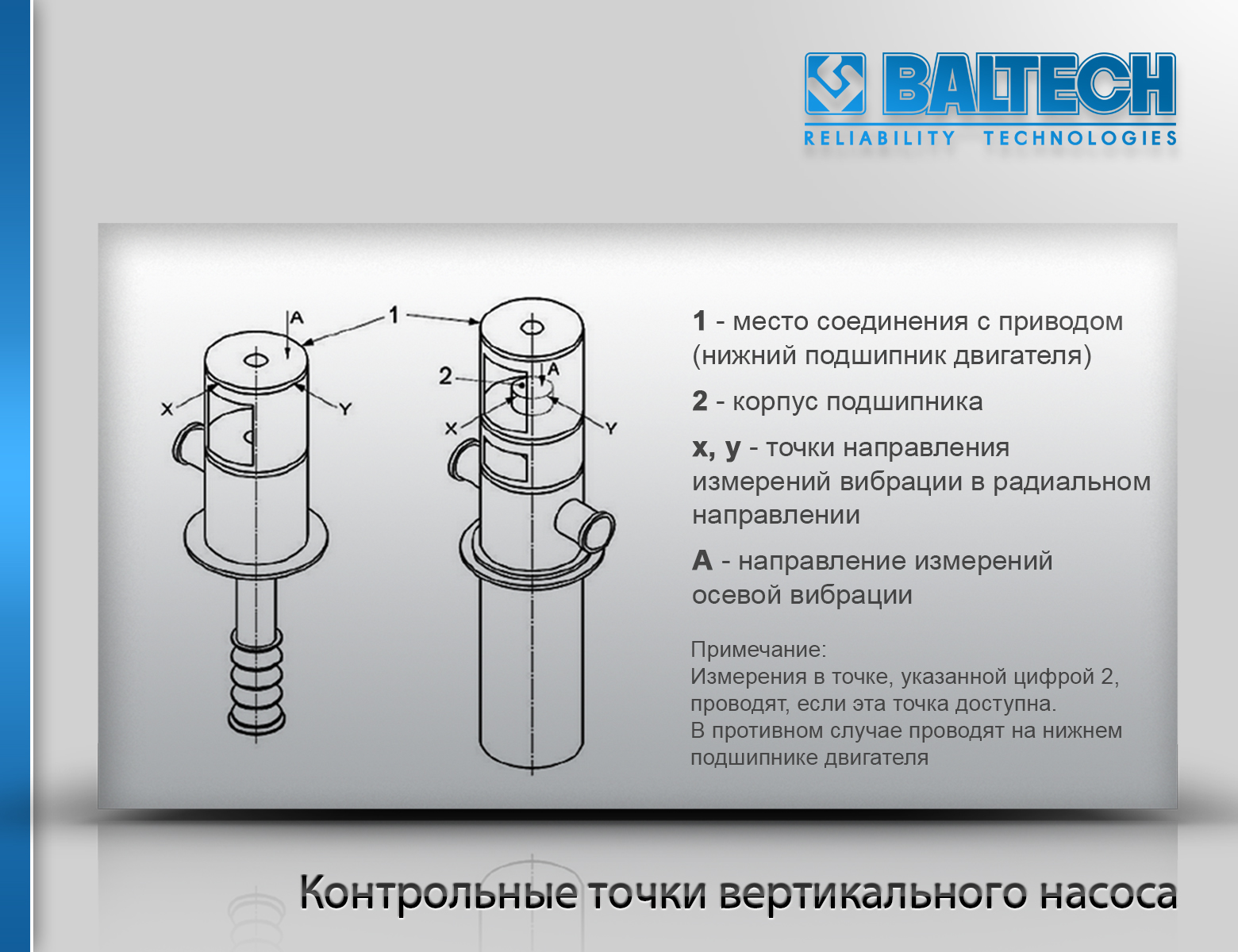 vibration Monitoring of pumps is carried out in the frequency range 10 Hz ÷ 1000 Hz via measurement of vibration velocity RMS (mm/s). For low-speed pumps with speed less than 600 rpm (10 Hz), an additional measurement of amplitude of vibration (µm), while the lower limit of the frequency range should not exceed 2 Hz.
To obtain the true values of the parameters of vibration of the pumps is important to eliminate all factors that distort the measurement results: the influence of magnetic fields and acoustic noise, temperature change, fluctuations in voltage supply, incorrect orientation of the vibration sensor, etc.
Vibration monitoring of the pump is carried out at the specified operating mode nominal values of rotor speed, flow and high suction head. For multimode pump vibration measurement is recommended for each of the working modes and as a representative of vibration characteristics to choose the maximum values.
Assessment of the current vibration state of the pump according to the GOST R 55265.7-2012 is recommended in accordance with Table 1.
table 1. The borders of zones of RMS of vibration velocity for pumps with power more than 1 kW and the number of blades more than two.
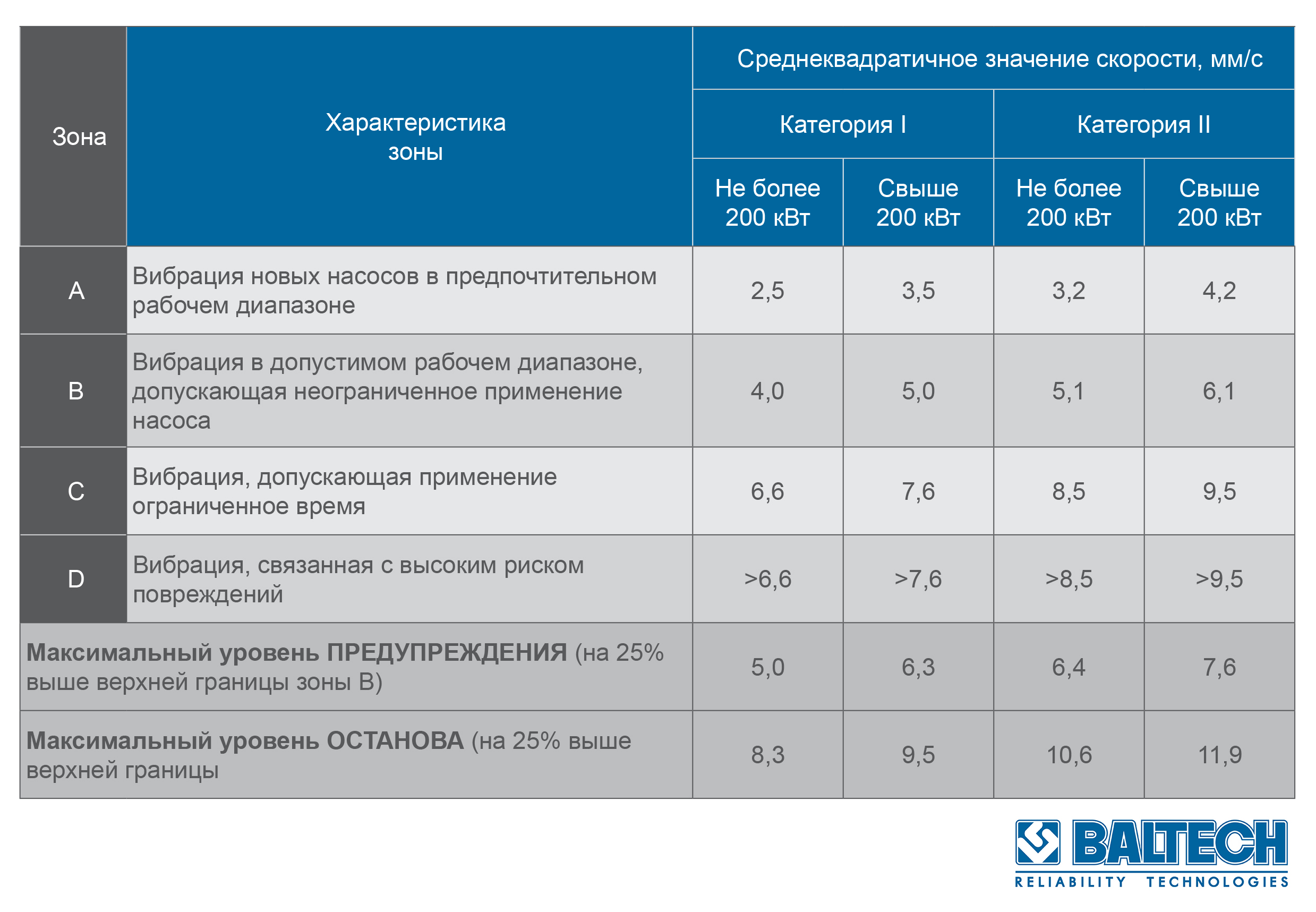 (Here Category I are the pumps with higher reliability and security-Category II pumps technical application).
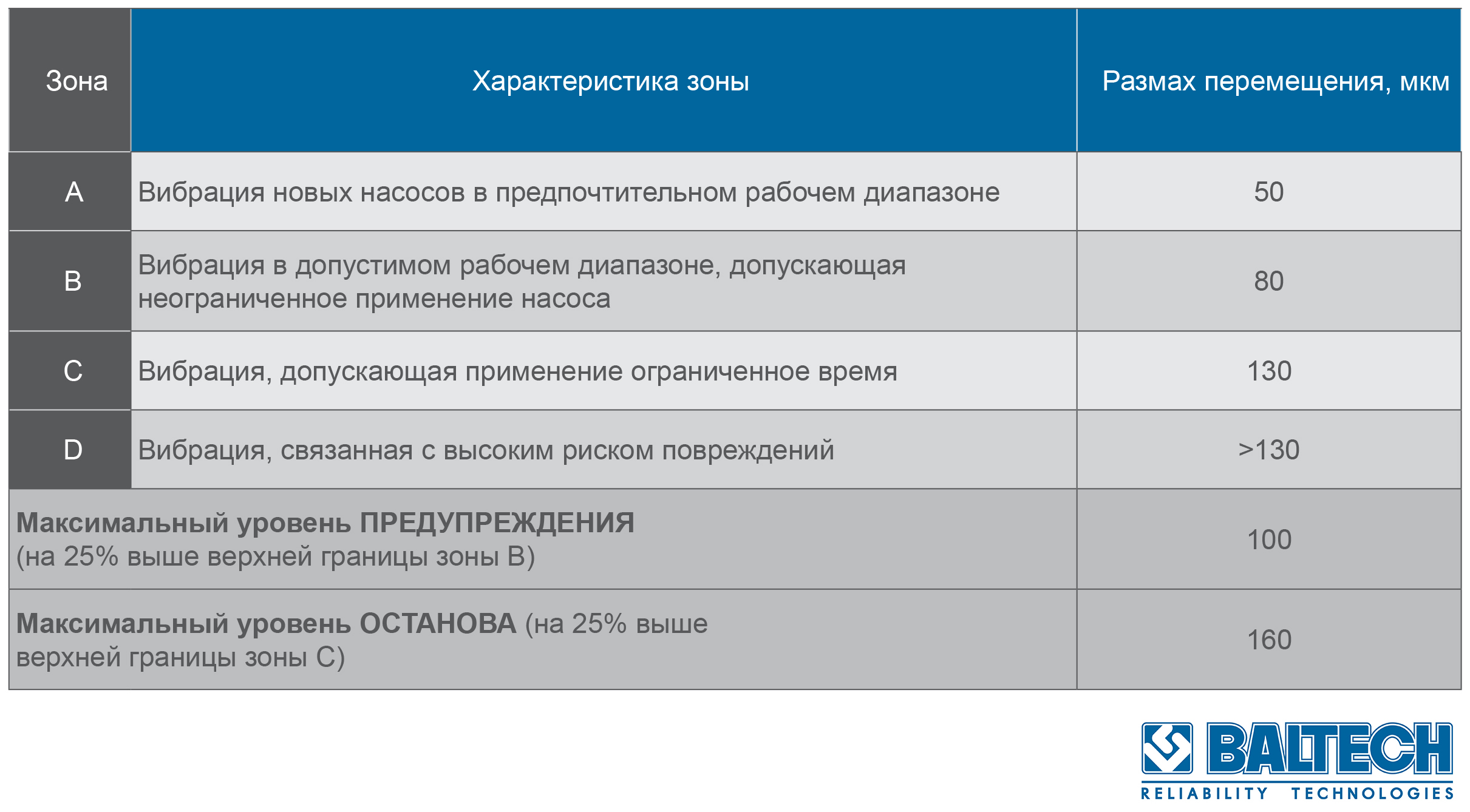
For low speed pumps optional use of Table 2 scope of vibration:
table 2. the boundaries of the zones of the amplitude of vibration for pumps with a rotational speed less than 600 rpm.
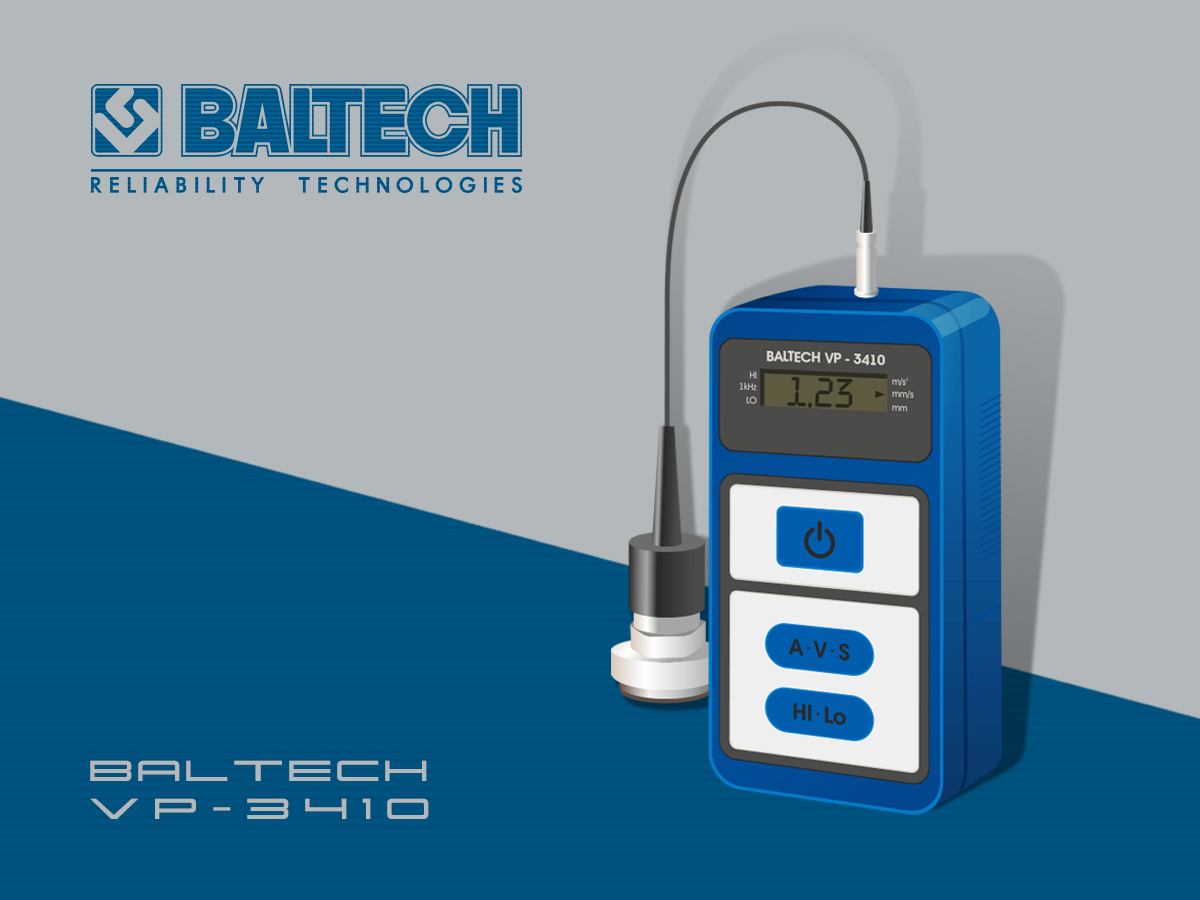
 the Most affordable, a simple and reliable control device of vibration pumps is vibromaster BALTECH VP-3410 capable of measuring all three parameters of vibration (velocity, displacement, acceleration) in the desired frequency ranges, although measurements frequency range BALTECH VP-3470.
 |
 |
In some cases it may be preferable to the use of the vibrometer-balancer “PROTON-Balance-II”, which you can use to control not only the vibration parameters (velocity and displacement), but also to conduct dynamic balancing of the rotor in its own bearings.
To ensure reliable vibration monitoring of pumps and other dynamic equipment, you can take the advantage of customer service “BALTECH” company, which experts will conduct in your workplace all necessary works with its own equipment.
Training of specialists in vibration monitoring and vibration diagnostics of dynamic equipment, we recommend you to send them to a training course of retraining and advanced training TOR-103 “fundamentals of nondestructive testing” in one of the licensed Training center (Saint Petersburg, Astana or lübeck (Germany)).